Beauty

Date:

Share post:

Introduction

  History of Beauty  
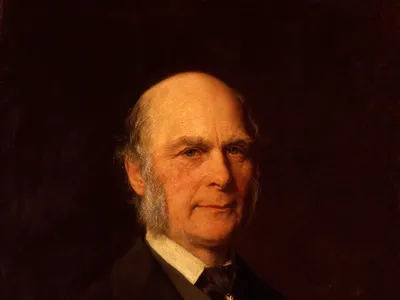
History of Beauty

In 1878 Sir Francis Galton gave a remarkable talk. He’s speaking to the Anthropologic Institute of Great Britain and Ireland known for his pioneering work in human intelligence. Galton is a brilliant polymath. He’s an explorer, an anthropologist, a sociologist, a psychologist, and a statistician. He’s also an eugenist. In this talk, he presents a new technique by which he can combine photographs and produce composite portraits. This technique could be used to characterize different types of people. Galton thinks that if he combines photographs of violent criminals, he will discover the face of criminality. But to his surprise, the composite portrait that he produces is beautiful. Galton’s surprising finding raises deep questions. What is beauty? Why do certain configurations of line color and form excite us so? These questions have been approached using logic and speculation for most of human history. But in the last few decades, scientists have addressed the question of beauty using the ideas from evolutionary psychology and tools of neuroscience. We’re beginning to glimpse the why and how of beauty, at least in terms of what it means for the human face and form. And in the process, we’re stumbling upon some surprises. When it comes to seeing beauty in each other, while the decision is certainly subjective for the individual, it’s sculpted by factors that contribute to the survival of the group. Many experiments have shown that a few basic parameters contribute to what makes a face attractive. This includes averaging, symmetry, and the effects of hormones.  Let’s take each one of these in turn. Galton’s finding that composite or average faces are typically more attractive than each face that contributes to the average has been replicated many times. This laboratory finding fits with many people’s intuitions. Average faces represent the central tendencies of a group. People with mixed features represent different populations, and presumably harbor greater genetic diversity and adaptability to the environment. Many people find mixed-race individuals attractive and inbred families less so. The second factor that contributes to beauty is symmetry. People generally find symmetric faces more attractive than asymmetric ones. Development abnormalities are often associated with asymmetries; in plants, animals, and humans, asymmetries often arise from parasitic infections. Symmetry it turns out, is also an indicator of health.


  1. What makes us beautiful?  

Beauty, an age-old enigma that has captivated humanity since time immemorial. But what truly defines it? Is it merely a veneer, or does it encompass something far deeper, more elusive?

When pondering beauty, our minds often gravitate towards physical allure. Symmetry, flawless skin, and a dazzling smile undoubtedly catch our attention. Yet, is there not a richer tapestry of beauty waiting to be unraveled?

Confidence is that intangible quality that sets hearts aflutter. There’s an undeniable allure in someone who exudes self-assurance, who walks with purpose and conviction. Confidence breathes life into mere appearances, drawing others towards its radiant glow.

Kindness and compassion, the gentle undercurrents of true beauty. A generous heart, a compassionate soul—these are the traits that leave an indelible mark, far surpassing fleeting aesthetics. It’s the warmth in a smile, the empathy in a gesture, that truly captivates.

Authenticity, the rare gem amidst a sea of facades. To be unabashedly oneself, flaws and all, is a beauty that transcends superficiality. It’s the honesty in expression, the raw vulnerability, that resonates with the depths of our being.

Intelligence and wit, the sparks that ignite fascination. Engaging in stimulating discourse, trading banter with ease—these are the hallmarks of an intellectually alluring presence. There’s an undeniable charm in a sharp mind, a quick wit that dances across conversations.

Passion and ambition, the driving forces behind magnetic personalities. To pursue one’s dreams with fervor, to blaze trails with unwavering determination—this is the essence of beauty in motion. It’s the fire in the eyes, the relentless pursuit of excellence, that commands admiration.

Resilience, the quiet strength that weathers life’s storms. In the face of adversity, to rise like a phoenix from the ashes—to find beauty in the scars, the stories they tell—is a testament to the human spirit’s enduring grace.

Emotional intelligence, the compass that guides meaningful connections. To understand one’s own emotions, to empathize with others’ experiences—to navigate the intricacies of human relationships with finesse—is a beauty that transcends words.

In essence, beauty is a symphony of virtues, a kaleidoscope of qualities that illuminate the human spirit. It’s the confidence that radiates from within, the kindness that touches hearts, the authenticity that resonates with truth. It’s the intelligence that captivates minds, the passion that ignites souls, the resilience that inspires hope. And in embracing these facets of beauty, we embark on a journey of self-discovery—a journey that unveils the true essence of what it means to be human.


  2. How to Look Beautiful Inside and Out too?  

• Following a healthy lifestyle.
• Skin care routine tailored to your skin type.
• Practicing good postures.
• Smile and be positive.
• Love yourself

  3. what are the ways to get beautiful naturally?  

• The beauty of eating well.• Sleep your way to good skin.

• Break the sweat.

• Embrace your most authentic self.

• Take care of your smile.

Read more: Exercise
The healthy-life-expert.com crew collected the information via a field visit to provide accurate and genuine information.
Previous article
Next article

Related articles

Is Coffee Good for You? The Science Behind Your Daily Cup

Is Coffee Good for You? The Science Behind Your Daily Cup Coffee is one of the most beloved beverages...

High LDL Cholesterol Could Be Silently Damaging Your Heart—Here’s How to Lower It Naturally

High LDL Cholesterol Could Be Silently Damaging Your Heart—Here’s How to Lower It Naturally You could have high LDL...

Top 7 Exercises for Bicep Tendonitis That Speed Up Recovery and Reduce Pain

Top 7 Exercises for Bicep Tendonitis That Speed Up Recovery and Reduce Pain Bicep tendonitis can turn simple daily...

Egg Whites or Whole Eggs? The Surprising Truth About Weight Loss and Heart Health

Egg Whites or Whole Eggs? The Surprising Truth About Weight Loss and Heart Health Egg whites and whole eggs...