Introduction
Lyme disease is a tick-borne bacterial infection that affects hundreds of thousands of people worldwide each year. Caused by the bacterium Borrelia burgdorferi, it spreads when infected black-legged ticks (also called deer ticks) bite humans.
Although it can become serious if untreated, Lyme disease is curable when caught early. However, awareness about its symptoms, risks, and prevention is still low in many parts of the world. In this article, we’ll explore everything you need to know about Lyme disease, including causes, risk factors, treatment options, and prevention strategies.
What Is Lyme Disease?
Lyme disease is an infectious illness that develops when a person is bitten by a tick carrying Borrelia bacteria. The tick must usually be attached for at least 24 to 48 hours to transmit the infection.
It is most common in the United States (particularly the Northeast, Midwest, and Pacific coast), parts of Europe, and Asia.
Causes of Lyme Disease
- Tick bite: The primary cause is a bite from infected black-legged ticks.
- Animal reservoirs: Ticks become infected by feeding on deer, rodents, or birds carrying Borrelia.
- Seasonality: Most cases occur during late spring and summer when ticks are most active.
Symptoms of Lyme Disease
The symptoms of Lyme disease can differ depending on how long the infection has been in the body.
Early Stage (3–30 days after infection)
- Bull’s-eye rash (erythema migrans), often expanding outward
- Flu-like symptoms: fever, chills, fatigue, muscle aches
- Headache and swollen lymph nodes
Later Stage (weeks to months after infection)
- Severe joint pain and swelling, especially in the knees
- Neurological issues such as facial palsy, memory problems, and numbness
- Heart rhythm irregularities (Lyme carditis)
- Shooting pains and tingling sensations
Chronic or Untreated Lyme Disease
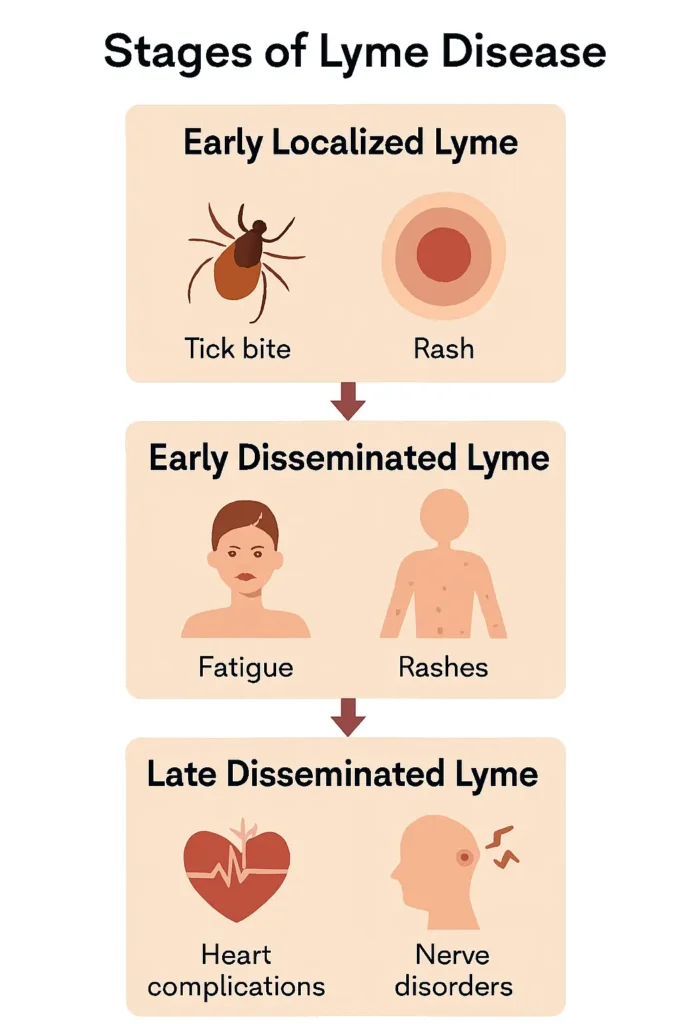
If left untreated, symptoms can worsen and lead to long-term disability. Some patients develop what is known as Post-Treatment Lyme Disease Syndrome (PTLDS), with fatigue, brain fog, and muscle pain lasting for months or years.
Risk Factors for Lyme Disease
Certain factors increase the likelihood of getting Lyme disease:
- Living in or traveling to wooded or grassy areas where ticks thrive
- Spending time outdoors without protective clothing
- Having pets that bring ticks indoors
- Not checking your body for ticks after hiking or gardening
Diagnosis of Lyme Disease
Lyme disease can be tricky to diagnose because symptoms mimic other conditions. Doctors usually consider:
- Medical history and exposure risk (time spent in tick-prone areas).
- Physical symptoms, especially the bull’s-eye rash.
- Laboratory tests such as ELISA (enzyme-linked immunosorbent assay) and Western blot test, which confirm the presence of antibodies.
Is Lyme Disease Curable?
Yes, Lyme disease is curable with antibiotics. The most common treatments include:
- Oral antibiotics: Doxycycline, amoxicillin, or cefuroxime (for early-stage cases).
- Intravenous antibiotics: For severe cases affecting the nervous system or heart.
Most people recover fully, especially when treatment starts early.
Can Lyme Disease Kill You?
Fatal cases are extremely rare, but untreated Lyme disease can cause life-threatening complications, such as:
- Severe heart rhythm disturbances
- Inflammation of the brain and spinal cord
- Nerve damage leading to paralysis
Early treatment prevents these risks in nearly all cases.
Is Lyme Disease Contagious?
No, Lyme disease is not contagious. You cannot get it from hugging, kissing, sexual contact, or sharing food. The only known way to contract Lyme disease is through a tick bite.
Does Lyme Disease Go Away on Its Own?
No. Unlike the flu, Lyme disease does not resolve naturally. Even if symptoms temporarily improve, the bacteria remain in the body and can cause long-term complications. Antibiotic treatment is necessary.
How to Prevent Lyme Disease

Prevention is the best defense. Some proven strategies include:
- Apply insect repellents: Use DEET or permethrin-treated gear.
- Stay on trails: Avoid tall grass and dense brush when hiking.
- Check your body and pets: Perform a full tick check after outdoor activities.
- Remove ticks safely: Use fine-tipped tweezers to pull ticks straight out.
Lifestyle Support for Recovery
For patients recovering from Lyme disease or managing lingering symptoms:
- Eat an anti-inflammatory diet (fruits, vegetables, omega-3s).
- Exercise moderately to rebuild strength and joint health.
- Practice stress management like yoga or meditation.
- Get enough rest to support immune system recovery.
Conclusion
Lyme disease is a growing global health issue, but the good news is that it’s curable and preventable. Awareness, timely diagnosis, and early treatment are the keys to recovery.
By practicing preventive measures such as using repellents, wearing protective clothing, and checking for ticks, you can enjoy outdoor activities without fear. And if you ever notice suspicious symptoms, don’t delay medical care—early action makes all the difference.
| Read more: Childhood Obesity Rising Globally |
| The healthy-life-expert.com crew collected the information via a field visit to provide accurate and genuine information. |

