Introduction
Measles is more than just a childhood illness. For decades, it was one of the leading causes of death among children worldwide—until the measles vaccine dramatically reduced cases. Unfortunately, in recent years, measles has been making a comeback in different parts of the world. The reason is simple: when vaccination rates drop, outbreaks rise.
Though preventable, measles is still a dangerous disease. It spreads quickly, causes severe complications, and can even be deadly if left unchecked. Understanding measles—what it looks like, its symptoms, the risks of outbreaks, and the importance of vaccination—can help keep families and communities safe.
What is Measles?
Measles is a highly contagious viral infection caused by the rubeola virus. Unlike many common viruses, measles spreads with astonishing ease. If one person has measles, 9 out of 10 unvaccinated people close to them will get infected.The virus spreads when an infected person coughs, sneezes, or even breathes near others. Tiny droplets remain suspended in the air or linger on surfaces for up to two hours.Historically, measles caused millions of deaths, but after the introduction of the vaccine in the 1960s, global cases dropped by over 80%. Still, outbreaks today remind us that the fight isn’t over.
What Does Measles Look Like?
One of the hallmarks of measles is its distinctive rash. Unlike other viral rashes that may appear in isolated patches, measles rash typically:
- Starts at the hairline or behind the ears
- Spreads down the face, neck, chest, and body
- Appears as flat red spots, often merging into larger blotches
- May include small raised bumps
- Lasts around 5–7 days before fading
In addition to the rash, measles can also cause tiny white spots inside the mouth, known as Koplik spots. These appear before the rash and are considered a telltale sign for doctors.
Is Measles Deadly?
For some, measles may feel like a severe flu with a rash. But for others—especially children under 5, pregnant women, and adults over 20—it can be life-threatening.
Serious complications include:
- Encephalitis (brain swelling) – which can lead to seizures, hearing loss, or brain damage
- Severe diarrhea and dehydration – especially dangerous for young children
- Blindness – linked to vitamin A deficiency during infection
The World Health Organization reports that in 2021 alone, measles killed more than 128,000 people, mostly unvaccinated children. These numbers highlight why prevention is critical.
Measles Symptoms
The disease doesn’t strike immediately after exposure. Instead, symptoms appear about 10–14 days after infection. They progress in stages, making it easier to track how measles unfolds:
Stage 1: Early Symptoms
The first phase resembles a strong flu or cold. Common signs include:
- High fever that can rise above 104°F (40°C)
- Persistent cough
- Runny nose and nasal congestion
- Red, watery eyes (conjunctivitis) that may be sensitive to light
- Koplik spots (tiny white dots inside the mouth)
Stage 2: Rash Development
Three to five days after initial symptoms, the measles rash emerges:
- Begins on the face and hairline
- Moves downward to the chest, arms, legs, and feet
- Fever often spikes during this stage
Stage 3: Recovery
The rash slowly fades, usually in the order it appeared. Patients may feel extremely weak and tired for weeks, even after the visible signs are gone.
Measles Outbreaks
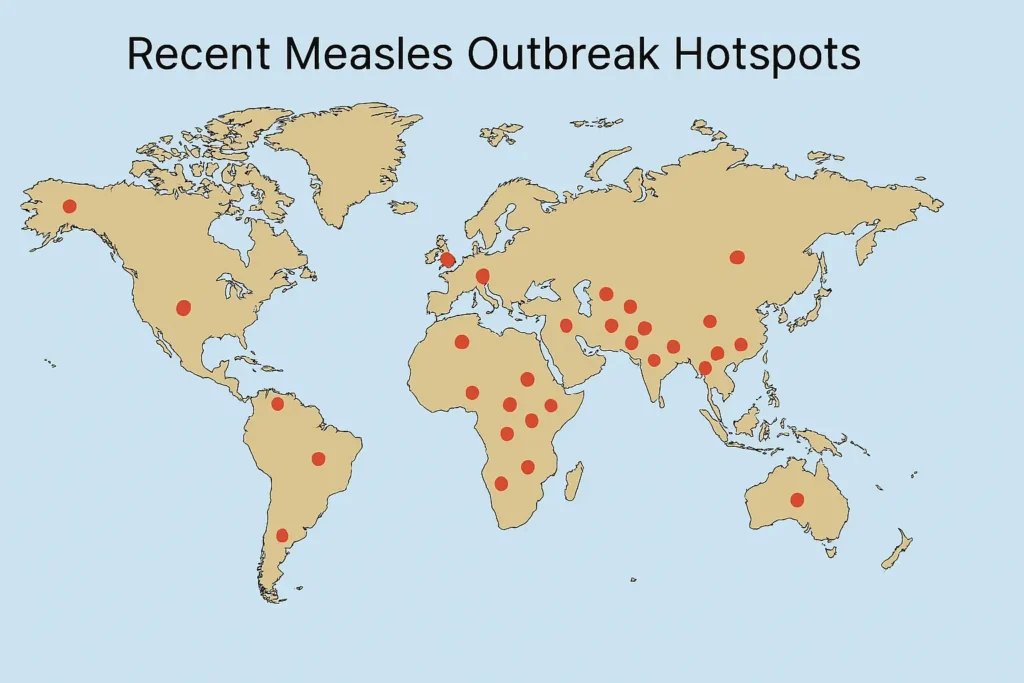
Even though measles is preventable, outbreaks continue to occur globally. The main reasons include:
- Vaccine hesitancy: Growing misinformation about vaccines has caused some parents to delay or refuse vaccination for their children.
- Limited healthcare access: In low-income countries, many families do not have access to routine immunization.
- Global travel: With people moving across borders daily, measles can easily spread from one country to another.
For communities, maintaining a 95% vaccination rate is crucial to achieving herd immunity. Anything below that threshold allows measles to spread quickly, triggering outbreaks.
Measles Rash: Why It’s Unique
The measles rash is more than just a skin symptom—it’s a key sign that helps doctors diagnose the infection. Unlike allergic rashes or other viral rashes, measles rash appears systematically and follows a clear pattern from face to feet.
The rash’s timing, combined with fever and Koplik spots, creates a clinical picture that makes measles easier to distinguish from other childhood illnesses like chickenpox or rubella.
The Measles Vaccine: A Life-Saving Shield
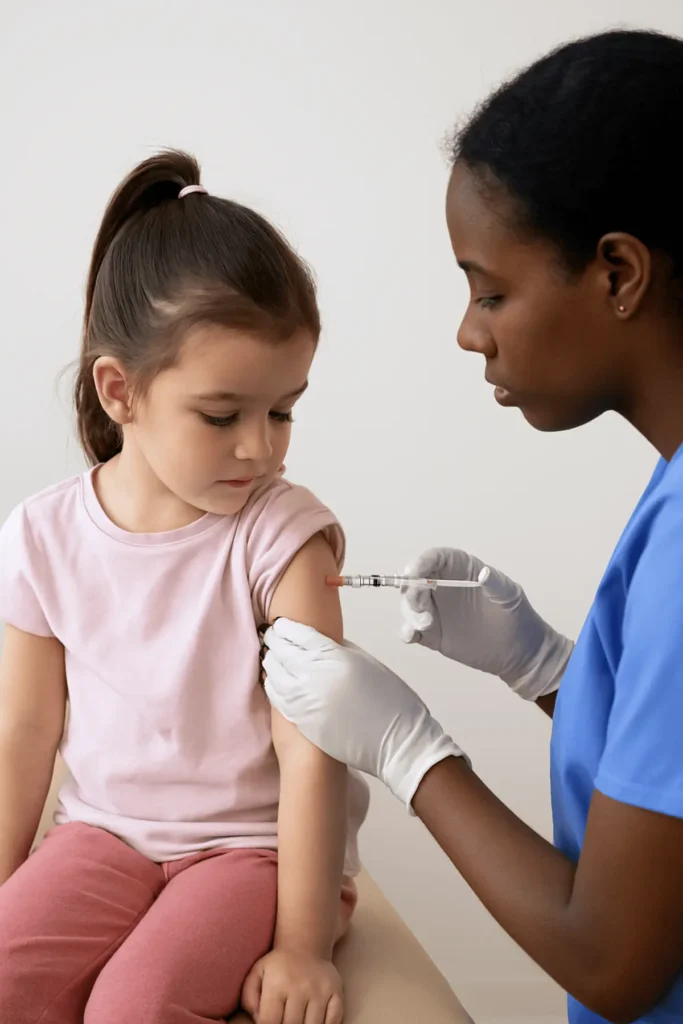
The greatest success story in the fight against measles is the MMR vaccine (measles, mumps, rubella).
- Two doses of the vaccine provide around 97% protection.
- It is safe, effective, and affordable.
- The vaccine not only protects individuals but also prevents outbreaks by building community immunity.
Countries that maintain high vaccination rates have nearly eliminated measles. However, regions with falling vaccine coverage continue to experience outbreaks, reminding us of the dangers of complacency.
Conclusion
Measles may sound like an illness from history books, but it is still very much a modern-day threat. Its ability to spread rapidly, cause severe complications, and take lives makes it one of the most dangerous childhood diseases.
The good news? It’s preventable. By ensuring children (and even adults who missed their shots) get vaccinated, we can prevent outbreaks and move closer to a world free from measles.
Ultimately, the story of measles is one of prevention versus neglect. With awareness, community action, and strong vaccine programs, measles deaths can become a thing of the past.
| The healthy-life-expert.com crew collected the information via a field visit to provide accurate and genuine information. |

