Introduction
Meningitis : Symptoms, Causes is a word that often brings fear—and rightly so. This serious condition affects the protective layers around the brain and spinal cord, sometimes turning life-threatening within hours. While it can affect anyone, children, teenagers, and young adults are at higher risk.
But here’s the hopeful news: with early treatment and vaccines, meningitis can often be prevented or managed. Let’s break it down in simple terms, answering the most common questions about meningitis.
What is Meningitis?
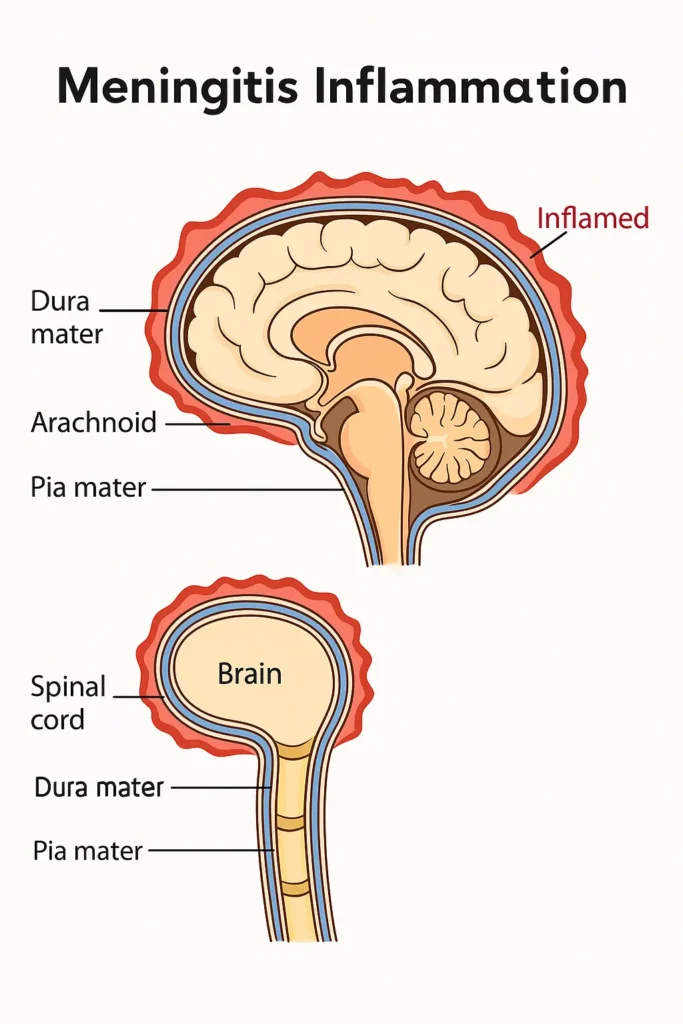
Meningitis is the inflammation of the meninges—the thin protective layers that cover the brain and spinal cord. This swelling is usually caused by an infection from bacteria, viruses, fungi, or parasites.
Because the brain and spinal cord are such vital parts of the body, inflammation in this area can be extremely dangerous. Meningitis can cause permanent disability such as hearing loss, brain damage, or even death if not treated quickly.
How Do You Get Meningitis?
The way you get meningitis depends on the cause:
- Bacterial meningitis often spreads through close contact, like coughing, sneezing, kissing, or sharing utensils.
- Viral meningitis is usually spread by viruses such as enteroviruses, which can pass through contaminated food, water, or direct contact.
- Fungal meningitis develops when fungal spores enter the body, more common in people with weakened immune systems.
- Parasitic meningitis is rare but can come from contaminated food, water, or soil.
In many cases, meningitis starts with an infection somewhere else in the body—like the throat, lungs, or ears—that spreads to the meninges.
Is Meningitis Contagious?

Yes, some types of meningitis are contagious, especially the bacterial and viral forms.
- Bacterial meningitis can spread through saliva, respiratory droplets, or close physical contact. That’s why outbreaks sometimes happen in schools, college dorms, or military barracks.
- Viral meningitis is contagious but usually less severe than bacterial meningitis.
Other types, like fungal or parasitic meningitis, are not contagious and usually affect only people with specific risk factors.
What Causes Meningitis?
Several germs can trigger meningitis, but the most common causes include:
- Bacteria: Neisseria meningitidis (meningococcal), Streptococcus pneumoniae (pneumococcal), and Haemophilus influenzae type b (Hib).
- Viruses: Enteroviruses, herpes viruses, influenza, and mumps virus.
- Fungi: Cryptococcus and Histoplasma species, especially in people with weakened immunity.
- Parasites: Rare causes such as Naegleria fowleri, often called the “brain-eating amoeba.”
Bacterial meningitis is the most severe form, often requiring urgent hospitalization.
Meningitis Symptoms
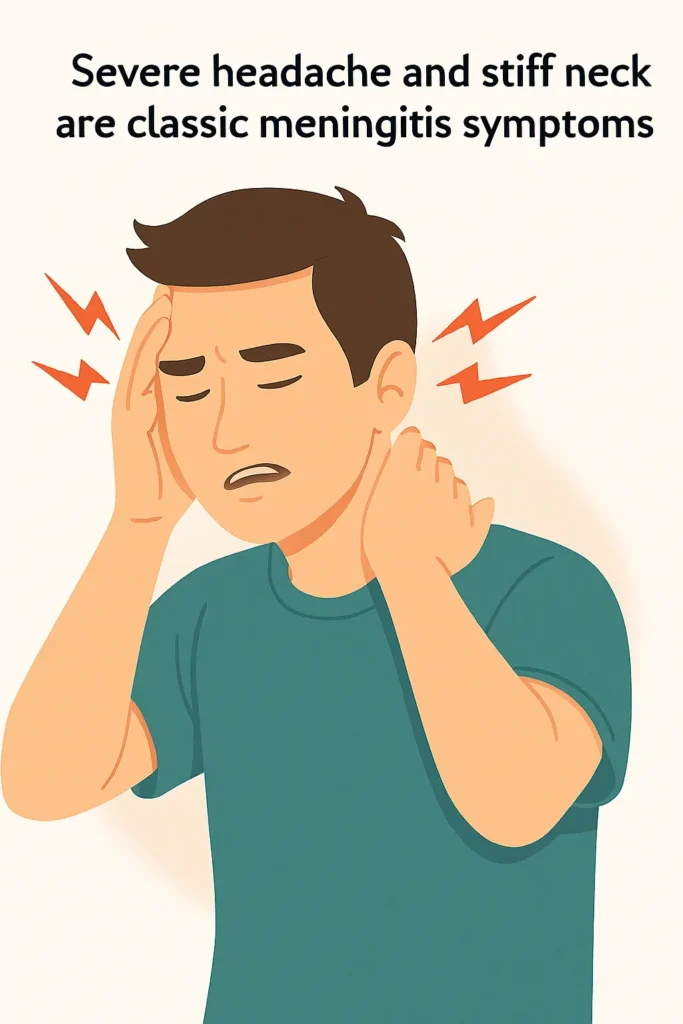
Meningitis symptoms can develop suddenly and worsen quickly. Common signs include:
- Severe headache
- Stiff neck (difficulty moving the neck without pain)
- High fever and chills
- Sensitivity to light (photophobia)
- Nausea and vomiting
- Confusion or drowsiness
- Seizures in severe cases
In babies and young children, symptoms may look different and include:
- Constant crying
- Poor feeding
- Bulging soft spot (fontanelle) on the head
- Unusual sleepiness
Because meningitis can worsen rapidly, anyone showing these symptoms should seek emergency medical care.
Meningitis Vaccine
The most effective way to protect against meningitis is through vaccination. Different vaccines target specific types of meningitis:
- Meningococcal vaccine – protects against Neisseria meningitidis
- Pneumococcal vaccine – protects against Streptococcus pneumoniae
- Hib vaccine – protects against Haemophilus influenzae type b
Most children receive these vaccines as part of routine immunization schedules. Teens and young adults may also need booster shots, especially before living in group housing like college dormitories.
Vaccines not only protect the individual but also reduce the risk of community outbreaks.
Conclusion
Meningitis is a serious disease that can change a life in hours. Understanding how it spreads, recognizing the symptoms, and knowing the importance of vaccination can save lives.
While bacterial meningitis is the most dangerous form, vaccines offer powerful protection. With awareness, early action, and strong immunization programs, we can reduce the burden of this disease and prevent outbreaks in our communities.
| Read more: Measles |
| The healthy-life-expert.com crew collected the information via a field visit to provide accurate and genuine information. |

