Stop Believing Myths: Here’s the Right Way to Eat Ghee
Ghee is making a strong comeback. Once villainized as a source of unhealthy fat, it’s now getting renewed respect — especially in Ayurvedic circles. But before you go spooning it over everything, here’s what you should really know about using ghee wisely.
What Makes Ghee Special
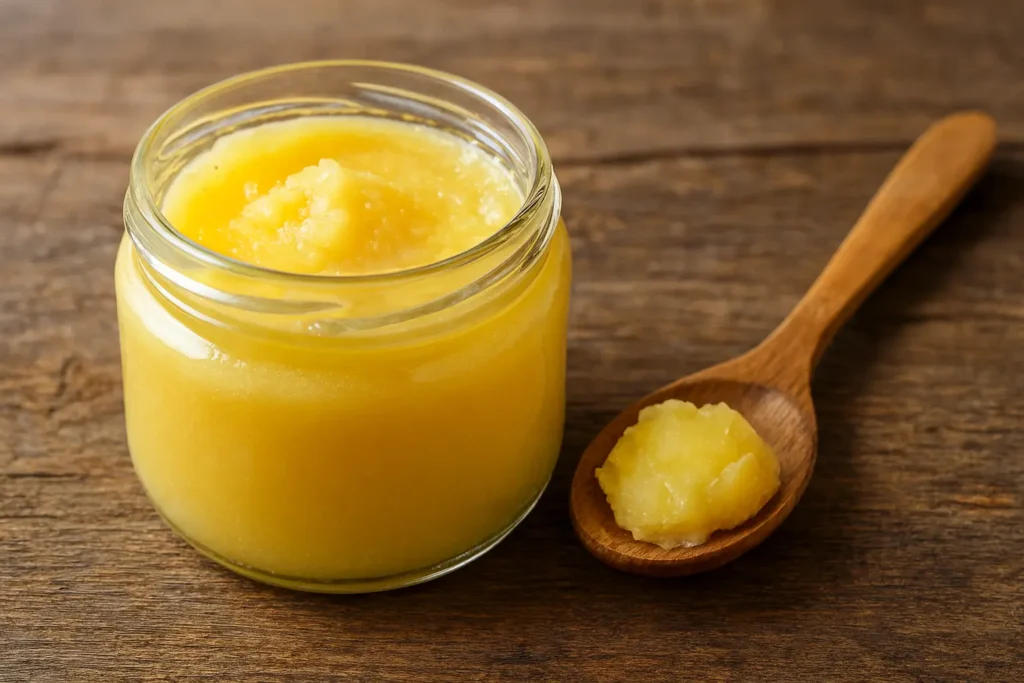
Ghee isn’t just melted butter. You make it by churning milk fat into butter and then gently simmering it until all water and milk solids evaporate. The result? A golden, concentrated fat that’s lactose-free and more heat-stable than butter — so it’s safer to cook with on higher heat.
Why Ayurveda and Nutrition Experts Love Ghee
Used in moderation, ghee can bring a lot to the table (literally):
- It’s rich in fat-soluble vitamins A, D, E, and K, which support everything from bones to immunity.
- It may help your body absorb nutrients better from other foods.
- There’s also some evidence that ghee’s butyrate content supports gut health and reduces inflammation in the digestive tract.
- In Ayurvedic practice, ghee often appears in treatments and tonics, thanks to its reputed healing properties.
How Much Ghee Is Too Much?
This is where things get tricky. Ghee isn’t bad — but overdoing it can backfire.
- A safe daily range is about 1 to 2 tablespoons. That gives you the benefits without adding too many extra calories.
- One tablespoon contains around 120–135 calories. Overconsumption, especially without balancing it with physical activity, can lead to weight gain.
- Since ghee is high in saturated fat, eating a lot can raise LDL (“bad”) cholesterol and increase heart disease risk.
- Some people might feel bloated or experience mild digestive discomfort if they have too much at once.
- If you have liver issues, excessive fat intake can put extra stress on the organ.
When Ghee Might Be a No-Go
Ghee isn’t ideal for everyone:
- Those with milk allergies should avoid it, despite its lactose-free nature.
- If you struggle with high cholesterol, heart disease, obesity, diabetes (type 2), or liver problems, talk to a health professional before making ghee a staple.
How to Use Ghee Safely & Smartly
Here are some practical tips to enjoy ghee’s benefits — without overdoing it:
Do’s
- Limit yourself to 1–2 tablespoons a day.
- Use ghee in place of other oils or butter when you cook, but don’t use extra on top of what you already do.
- Add a teaspoon of ghee post-cooking to grains, veggies, or lentils for flavor and a vitamin boost.
- Mix a little ghee into warm milk or herbal tea as a soothing, nutrient-rich drink.
- Pair ghee with fiber-rich foods (whole grains, vegetables) to aid digestion.
- Choose pure, unadulterated cow ghee for best results.
- Store it in a cool, airtight container to preserve freshness.
Don’ts
- Don’t use large amounts for frying or deep-frying.
- Don’t make ghee your only fat source — mix in nuts, seeds, and healthier oils.
- Avoid eating a lot of it in one sitting — you’ll risk calorie overload or digestive upset.
- Don’t skip medical advice if you already have a condition that limits fat intake.
Bottom Line
Ghee can absolutely be a nourishing, flavorful part of your diet — as long as you use it carefully and in moderation. One to two tablespoons a day is a reasonable range to reap its wellness perks without going overboard. Always keep your health history in mind, and if in doubt, let a doctor or nutritionist guide you.
| Read more: 5 Ancient Ayurvedic Leaves That Can Naturally Lower Cholesterol and Keep Your Heart Strong |
| The healthy-life-expert.com crew collected the information via a field visit to provide accurate and genuine information |

